Readdy Review

8.1/10

Generate websites from prompts and move them toward editable code fast.

Review updated May 2026 By The AI Way Editorial 3 min read
Readdy Free Forever Web-Based Freemium from USD 25.00/mo

Our Verdict

Readdy is useful when you want AI to do more than throw out layout inspiration and you actually care about moving toward a live website. Its biggest value is compressing idea-to-site time. The limit is that the first generated result is still just the start, not the finished product.

Official site
A free plan is listed; verify current limits before upgrading. Starts at USD 25.00.
open_in_new Try Readdy
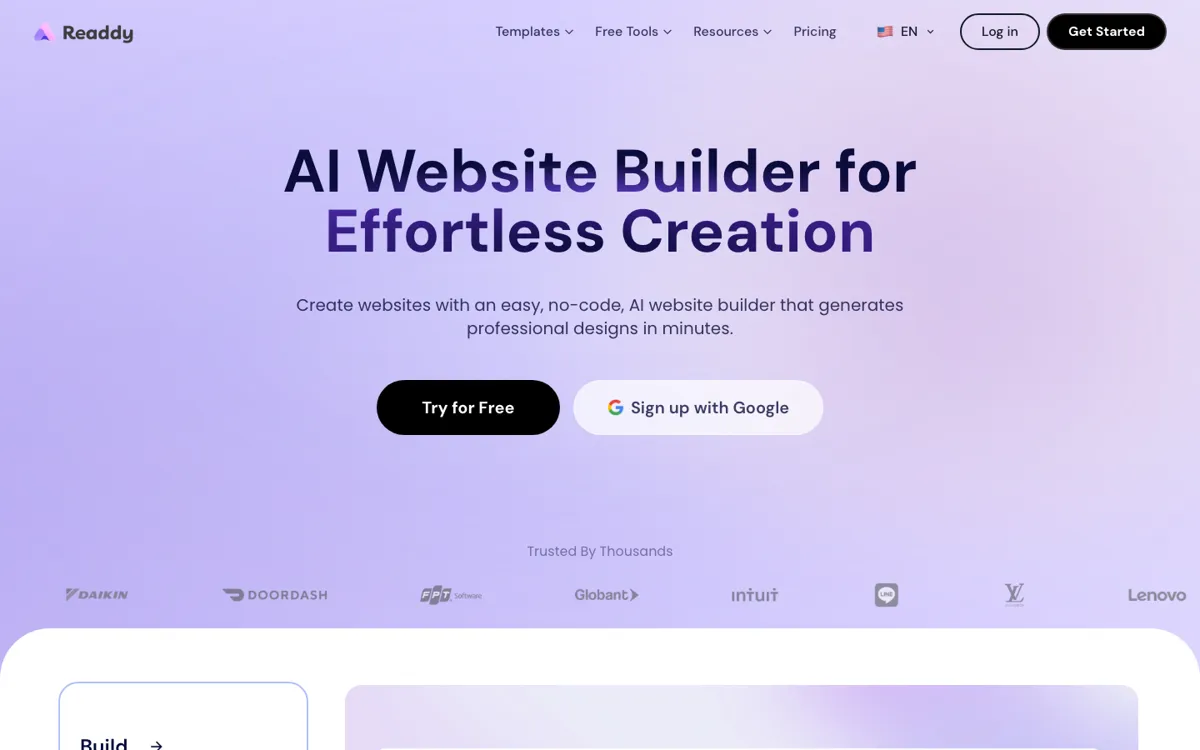
Official Website Snapshot Visit Site ↗

check_circle Pros

  • It goes beyond mockups and points toward editable output and publishing.
  • The prompt-first workflow helps founders get past the blank page fast.
  • The public pricing page makes the free tier and paid jump easy to judge.

cancel Cons

  • A good-looking first pass can still hide a lot of cleanup.
  • Teams with mature design systems may want deeper manual control.
  • The free tier is more of a proving ground than a full operating tier.

Should you use it?

founders and small teams turning ideas into website drafts quickly

Skip it if: your team already has a strong design system and mostly needs refinement

Is it worth the price?

Freemium Starts at USD 25.00

The free tier is enough to test whether Readdy actually saves time at the start. Paid plans make more sense once website generation becomes a repeated workflow instead of a one-off experiment.

The Free Tier

Free includes 250 monthly credits, 2 projects, and no live site.

Paid Upgrade
$25/month

Starter adds 30,000 credits, 1 live site, custom domain, and GitHub export.

One thing to know before you start

Use Readdy on a real landing page or site you would otherwise delay. That is where its speed advantage becomes obvious enough to judge honestly.

What people actually use it for

Product idea to draft

A strong fit when a founder knows what they want to build but does not want to spend the first stretch drawing pages by hand. Readdy helps turn that idea into a visible website direction quickly enough to test whether it deserves real build time.

UI to starter code

Useful when the team cares not only about how the site looks, but also about shortening the distance to implementation. Readdy is more interesting than pure mockup tools when that handoff pressure matters from day one.

Prototype pages fast

Good for teams that need a first version of a page now, whether for pitching, testing, or internal review. It helps produce something concrete before the work graduates into deeper refinement elsewhere.

What does Readdy actually do?

Readdy targets a familiar bottleneck: the gap between having a website idea and having anything visual enough to judge. It is most useful when the first design step is what keeps stalling the project.

The boundary is still important. Readdy speeds up the start, but it does not remove the need for product judgment or downstream cleanup once the work turns into a serious production website.

What you can do with it

Generate websites from natural-language prompts.
Edit generated layouts inside a visual builder.
Move from generated design toward clean front-end code.
Start from templates when you do not want to prompt from zero.
Publish with hosting, domains, and integrations in the same stack.

Technical details

code_output
Docs position the output as clean, production-ready code.
builder_scope
Focused on AI website generation, editing, and publishing.
publish_stack
Includes hosting, domains, SEO, forms, and integrations.
template_entry
Supports templates alongside prompt-first generation.

Key Questions

Is Readdy just another inspiration tool?
Not really. Its value is stronger if you care about getting from prompt to something closer to editable website output, not only to a pretty mockup.
Who gets the most value from Readdy?
Founders, indie makers, and lean product teams get the clearest benefit because they often need usable interface drafts fast and do not want a long manual design phase before testing an idea.
Does the free tier look usable?
Yes for testing the workflow, but not as the whole long-term story. The public pricing page makes it clear there is a real paid step once usage becomes serious.